Richards-Wilcox Garage Doors: An Installer's Honest Review
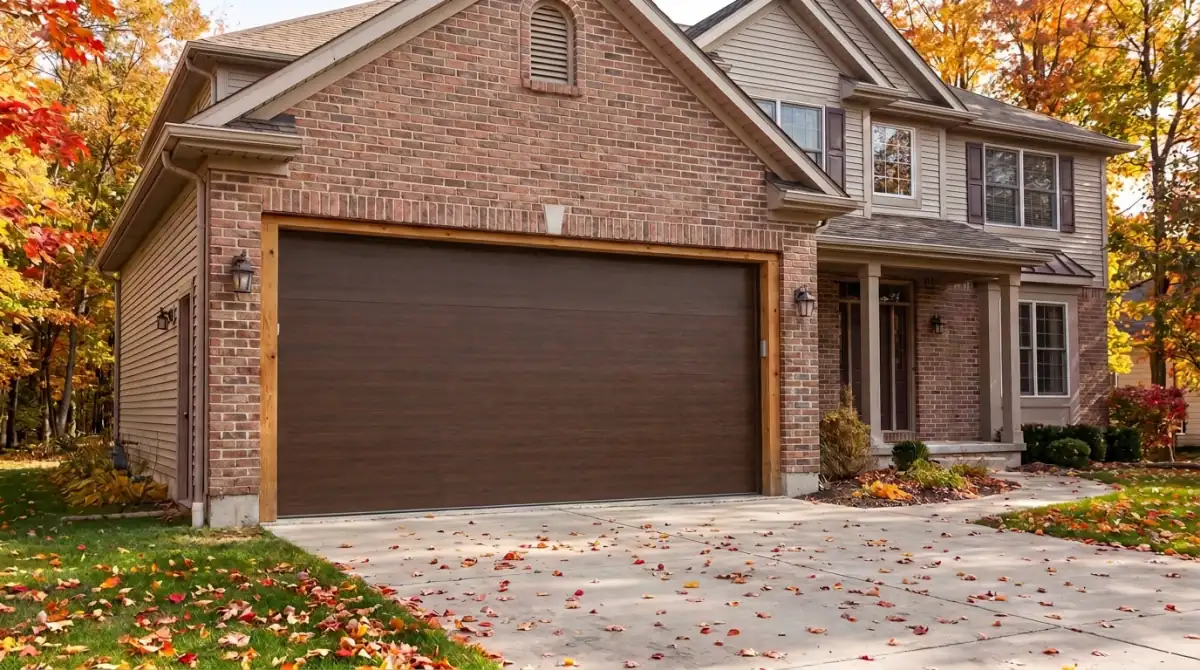
Richards-Wilcox is the name that usually comes up second when a GTA homeowner is shortlisting Canadian garage door manufacturers, and often first when the opening is wide, heavy or non-standard.
This is a view from the installation side. Richards-Wilcox is one of the manufacturers covered in our roundup of the top Canadian garage door brands, and this goes further on what the doors are like to specify, fit and live with.
A note on the name
The company is Richards-Wilcox, with the s and the hyphen. You will see “Richard Wilcox” used widely, including in search results and on plenty of installer websites, and both refer to the same manufacturer.
It is worth knowing which is correct if you are looking up warranty terms or chasing parts, because searching the proper spelling gets you to official documentation rather than to third-party pages repeating the error. The same applies when you are matching a replacement section to an existing door, where the series name has to be exact.
The confusion is understandable. Plenty of long-established manufacturers get shortened in everyday use, and installers themselves say it both ways on site. Nothing turns on it commercially, and a quote that spells it either way is not a signal of anything. It matters only at the point where you need the manufacturer’s own information rather than someone’s summary of it.
Are Richards-Wilcox garage doors any good?
Yes, and their particular strength is worth understanding because it is not the same strength most residential brands compete on.
Richards-Wilcox is among Canada’s longest-established door manufacturers, Ontario-based, with a heritage that spans commercial and industrial hardware as well as residential doors. That background is the interesting part. A manufacturer whose history includes heavy-duty applications tends to carry that specification discipline into its residential hardware, and it shows up in the track gauge, hinge specification and roller mounting rather than in the part of the door you look at from the street.
For a standard single door on a standard opening, that margin is largely invisible and you would be well served by any of the credible Canadian manufacturers. Where it starts to matter is when the door gets wide, heavy, or both.
Where the heavy-door heritage earns its keep
Wide and heavy doors fail differently from standard ones, and the difference is cumulative rather than dramatic.
Every component on a garage door carries load through every cycle. On a wide double door, or a solid wood door, or an insulated oversized door, each of those components carries more load per cycle than the same part on a light single door. Hinges, rollers, tracks and bearings all wear proportionally faster. Nothing breaks early in a spectacular way; the hardware simply reaches the end of its service life sooner.
A hardware package specified with more margin pushes that out. On an oversized opening this is the specification worth interrogating, and it is the one most quotes gloss over in favour of talking about the door’s appearance.
Two practical questions to ask on a heavy or wide opening:
- What gauge are the tracks, and what hardware package comes with this door? Not all tracks supplied with a residential door are equal, and the heavier specification is often an option rather than the default.
- How are the springs being calculated? On a heavy door this is less forgiving than on a light one, and it should be measured from the door rather than copied from whatever was there before.
This is also the part of the conversation where a replacement for an original heavy wood door needs care. Those doors are heavy, and the counterbalance system fitted to them was sized accordingly. A modern insulated steel replacement will weigh differently, and the springs need recalculating rather than inheriting.
Richards-Wilcox and Garaga compared
Both are Canadian manufacturers with genuine track records, and both will serve a GTA home well. The differences are ones of emphasis rather than quality.
| Richards-Wilcox | Garaga | |
|---|---|---|
| Base | Ontario | Quebec |
| Heritage | Residential plus commercial and industrial hardware | Residential and commercial doors since 1983 |
| Traditional strength | Hardware and track specification, heavy openings | Insulated construction and design range |
| Distribution | Through installers | Through a dealer network |
| Comes up most for | Wide, heavy, oversized and custom openings | Insulated doors, style and finish choice |
| What to scrutinise | Hardware package and track gauge | Insulation figure and what it measures |
The honest summary is that on a standard opening this choice matters far less than homeowners expect, and on a non-standard one it is worth a proper conversation. Our Garaga review covers the other side of that comparison in the same detail, including the insulation measurement trap that makes two doors look more different on paper than they are in practice.
What should decide it is the specific door you are quoted rather than the manufacturer in the abstract: construction, the warranty broken down by component, the hardware package, lead time, and how parts will reach you in ten years.
Warranty and parts, the questions that matter
Warranty is usually quoted as a single headline number, and that number is close to useless on its own. Ask for it broken out.
- The finish, against cracking, peeling and delamination, which is what you will actually notice from the street in year twelve
- The sections themselves, including any bonded insulation separating from the steel
- The hardware, which is normally covered for a much shorter period and is the part that will genuinely need attention first
- Whether terms change if the door is installed by someone outside the manufacturer’s network
Parts availability follows the same logic as every manufacturer. Current models are straightforward. Once a series is discontinued, sourcing a matching section for a door damaged in year fifteen becomes the constraint, and a mismatched replacement panel is obvious from the driveway. That single issue pushes more doors toward full replacement than actual structural failure does.
Domestic manufacturing helps here. An Ontario-based manufacturer generally means shorter lead times on custom work and a shorter supply chain for parts than an imported alternative, which matters more on a door you intend to keep for twenty years than it does on the day you buy it.
What actually determines the outcome
The same conclusion applies here as to every door we fit, and it is worth repeating because it consistently surprises people: the manufacturer is a smaller variable than the installation.
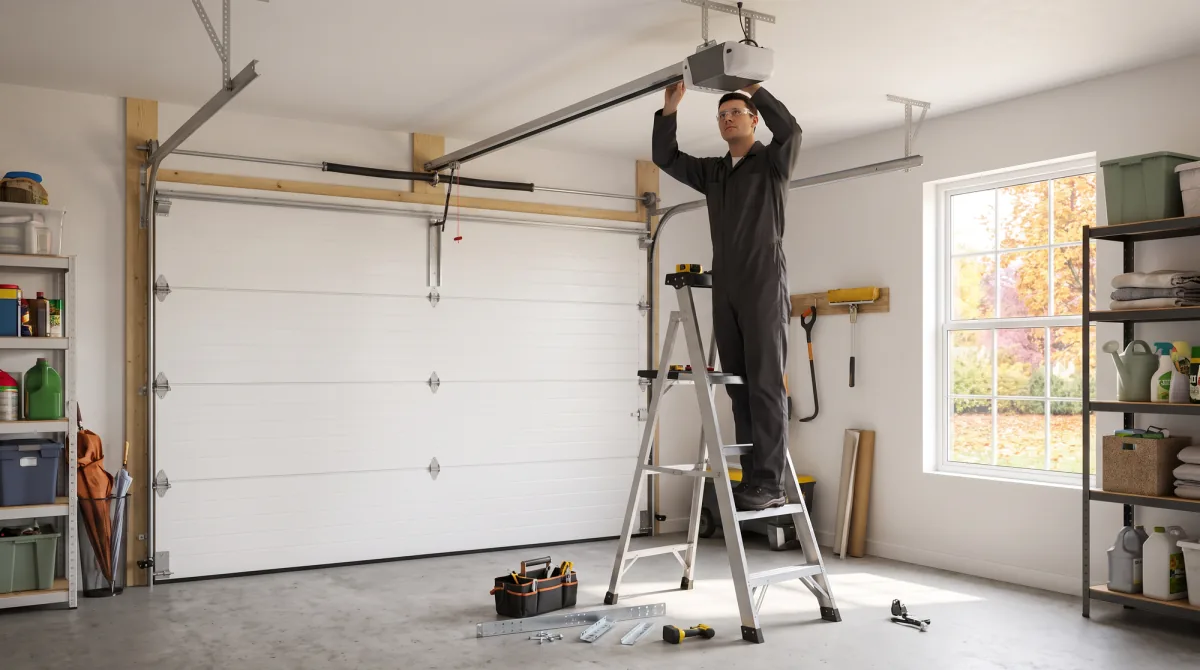
Whether the springs were calculated from the new door’s weight. Whether the tracks suit its thickness and the opening’s headroom. Whether the opener’s horsepower matches what it is now lifting. Whether anyone balance-tested the door before packing up. Those four decisions determine whether you get twenty good years or four frustrating ones, and they are made on your driveway rather than in a factory.
If you are still choosing between materials rather than manufacturers, our guide to choosing a garage door material is the better starting point, since it narrows the brand question considerably.
Getting a comparable quote
We install and service Canadian-made doors across the GTA, including on the wide and oversized openings where the hardware specification genuinely matters. Our residential installation quotes are written and itemised, with removal and disposal, tracks, hardware and spring re-sizing listed separately rather than folded into a single figure.
If you have quotes from two manufacturers and want to know whether you are comparing like with like, send them over. Call 647-930-7997 or book an appointment and we will measure the opening and tell you what it actually needs.